Setting the Record Straight on the Niger Delta Struggle ; How Boyloaf Shifted the Focus to an OIL WAR - By Jude Gbaboyor - Part 1
- by Elaye, Bayelsa, HSN
- about 20 hours ago
- 216 views
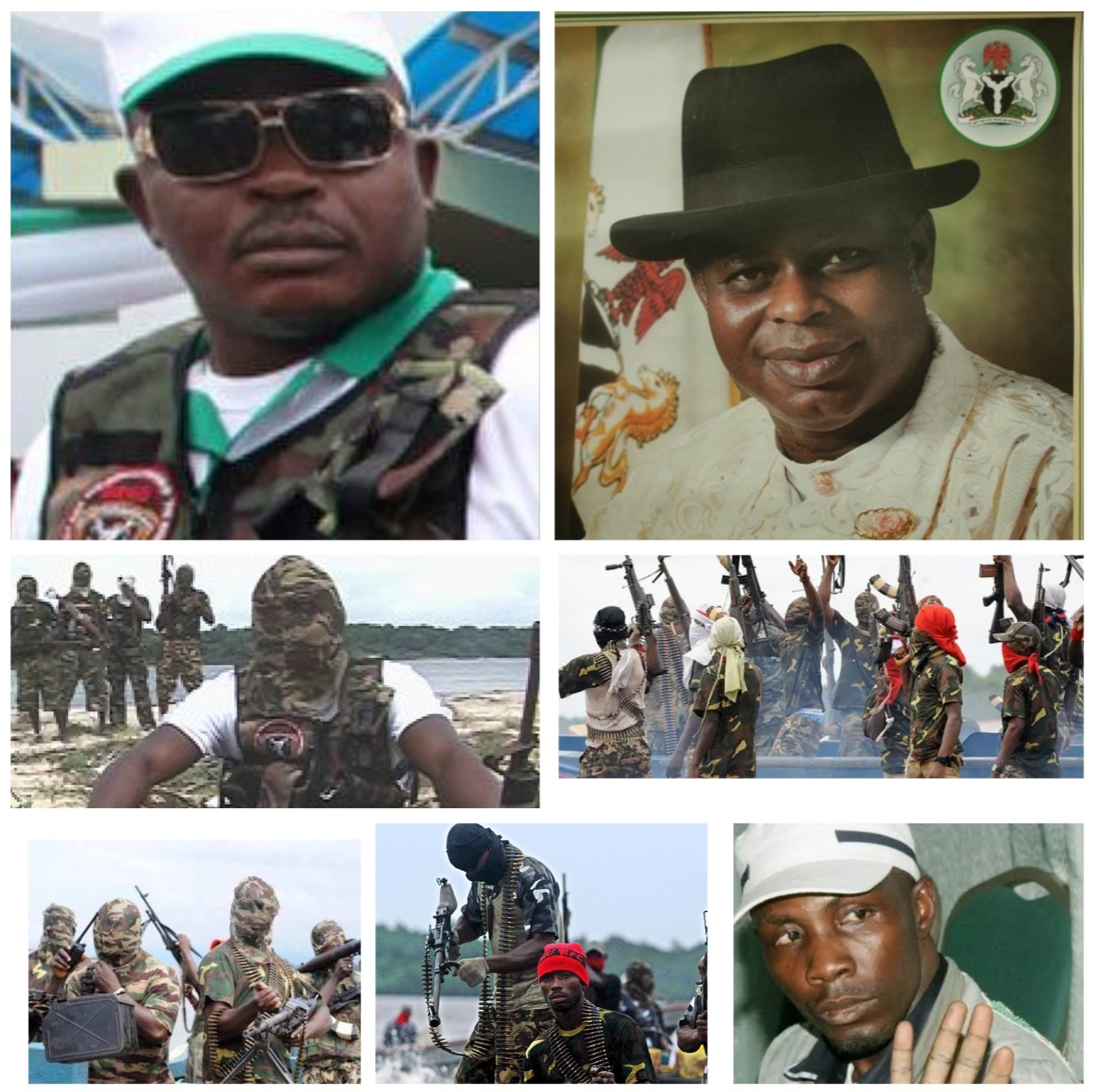
... The Strikes in Rivers State: EA Sea Eagle Offshore Terminal, Beniseide, Oloibiri, Bakassi Peninsula, Bonga Field, and Other Activities
The defunct Movement for the Emancipation of the Niger Delta (MEND) was named by Chief Victor-Ben Ebikabowei, famously known as Gen. Boyloaf.
The group was formed following the impeachment of the late Chief Diepreye Alamieyeseigha in Bayelsa State.
Boyloaf and his allies believed the impeachment was sponsored by the Obasanjo administration to target the Governor-General of the Ijaw Nation.
Henry Okah initially wanted the group to attack members of the Bayelsa State House of Assembly.
However, Boyloaf advised against attacking their own people over politics. Instead, he proposed launching an "Oil War" against the Federal Government, targeting the National system that had targeted late Alamieyeseigha.
A meeting was called in Warri, bringing together Henry Okah, Gen. Boyloaf, Farah Dagogo, Olo Albert (aka The Governor), and Tompolo.
Boyloaf briefed the leaders on the operation, outlining a strategy to avoid politicians and focus their firepower on destroying national crude oil trunk lines to disrupt the country's oil production.
Known for his deep familiarity with the creeks and open ocean, Boyloaf took charge of navigation and strategy.
Tompolo agreed to send his men to Port Harcourt to join Boyloaf where the first strike would take place, to officially introduce "The Movement For The Emancipation of The Niger Delta" (MEND) to the nation.
The First Strike in Rivers State
The initial mission began in Rivers State under Boyloaf’s direction, with the agreement of the group to inflict unprecedented damage on key oil infrastructure before establishing a unified base in Delta State at Tompolo's location.
Tompolo’s men arrived by boat to meet the squad in Rivers State. Boyloaf and his strike force guided them through Creek 6, Adamakiri, and Bonny, targeting major oil trunk lines serving Andoni, Ogoni, and Bonny.
After destroying these key crude oil lines, the group relocated to Delta State to consolidate their forces at Tompolo’s base.
Upon arriving, the group noted that Tompolo had been primarily focused on conflicts with neighboring Itsekiri communities and running illegal bunkering operations in Camp Iroko, while constructing another site called Camp 5.
The EA Field Operation
The destruction of the oil facilities in Rivers State triggered a major national security crisis. While the attacks dominated headlines, MEND had not yet formally claimed responsibility.
When Tompolo asked about the next step, Boyloaf designed a strategy to strike the EA sea eagle floating offshore terminal in Bayelsa State.
Boyloaf led the MEND strike force from Camp 5 navigatiin through Ogulagha into the high seas. Unaccustomed to navigation in deep ocean waters, many of Tompolo’s men suffered severe seasickness during the transit—vomiting, crying, and asking if Boyloaf was taking them to Gabon.
Boyloaf guided the MEND strike force to the EA Sea Eagle facility, where the operation was carried out successfully, resulting in the capture of foreign expatriates.
The strike force returned to Camp 5 in Delta State. Following the mission, MEND officially claimed responsibility for both the Rivers State strikes and the EA Sea Eagle operation.
Boyloaf operated under the code name General Brutus Ebipade ; see linked for reference ( https://share.google/aimode/J2Ayq5GtS8qwMf06O ).
While Boyloaf planned and executed the tactical operations, Tompolo remained primarily at shrine, acting to providing spiritual support to the fighters.
The Beniseide Operation
Anticipating military action from the Nigerian Armed Forces, Boyloaf designed a follow-up operation to coincide with Armed Forces Remembrance Day, targeting facilities at Beniseide to dedicate it to the Nigerian Army.
Boyloaf’s led the assault at Beniseide, seizing arms and ammunition from military positions. During the return trip to Camp 5, the group encountered Nigerian Army reinforcements.
While the Tompolo's fighters out of fear withdrew, Boyloaf ordered the Bayelsa and Rivers State fighters to turn back and engage the incoming Nigerian forces before completing their return to base.
Escalation and Political Demands
As the conflict impacted national oil output, the Federal Government sought negotiations for the release of the captive expatriates.
MEND set its conditions: no talks would proceed without the immediate release of Chief Diepreye Alamieyeseigha and Asari Dokubo.
Camp 5 in Gbaramatu became the central hub of operations. When President Obasanjo reached out to address the situation, Tompolo, out of fear, denied responsibility—attributing the attacks to Bayelsa and Rivers State militants led by Boyloaf and Farah Dagogo.
In response, Boyloaf left Camp 5 to directly communicate MEND's demands to the government, reiterating that oil facilities nationwide would remain targets until Alamieyeseigha and Dokubo were freed.
Peace advocate Timi Alaibe later contacted Boyloaf to initiate dialogue, prompting a meeting before Boyloaf returned back to Camp 5.
Internal Fractures and the Move to Bayelsa
Tensions grew at Camp 5 as representatives, including George Timinimi, Harrison and others were sent to negotiate independently with oil companies and government officials regarding the hostages, without securing the release of Alamieyeseigha and Dokubo.
Observing this shift in priorities and seeing that Tompolo and his people had turned the struggle into their personal business, Boyloaf and his core group withdrew from Camp 5 to pursue independent operations.
Boyloaf contacted Henry Okah to report the division, and MEND subsequently executed additional strategic operations. Moving his base of operations to Rivers State in Farah's place, Boyloaf continued targeting key infrastructure.
The Hunt for Okah
During this period, intelligence was leaked to the government by Tompolo and his people regarding Henry Okah's arms procurement. They informed the government that Okah was supplying arms to Boyloaf and his partner in River State and claimed that arresting him would end the Niger Delta struggle, which led to heightened surveillance and hunt for Okah.
Security forces and Tompolo's spies planned to arrest Okah in Amassoma in Bayelsa State during his father’s funeral.
However, Boyloaf and Farah countered this by arranging a heavily armed security detail of fighters with AK-47s, General Purpose Machine Guns and Rocket Lunchers to escort Okah in broad daylight, forcing Nigerian security to abandon their plan to avoid bloodbath and allowing Okah to return back safely through creeks and the oceans after his father burial.
Another Major National Insecurity Event
Tompolo and his people gave Obasanjo the impression that they were in charge of the Niger Delta struggle and that if he settled with them, the armed struggle would come to an end. Obasanjo then informed the IOCs to receive Tompolo and come over to Ota Farm for a meeting.
Upon hearing about the planned high-level meetings between Tompolo and the IOCs, Boyloaf and his team strategized to prove the government wrong—showing that one man could never be in charge of the Niger Delta struggle, as it was a collective idea.
Boyloaf and his men stormed AGIP. Following heavy gunfire and explosions caused by MEND fighters, the Italian boss, Francisco—who was the swamp area manager and hailed from the AGIP family, the "mafia of all mafias"—along with other executives, were taken into custody and transported to Rivers State, creating another major national security event.
Boyloaf Move to Bayelsa State
Seeking better tactical control over regional operations, with the help of Okah, Boyloaf deployed 16 gunboats to relocate his primary base to Bayelsa State, rapidly organizing operations upon arrival.
The Oloibiri offshore floating Terminal Operation
Operating from Bayelsa State, Boyloaf's fighters launched an operation in Oloibiri offshore floating Terminal off Middleton offshore terminal, taking additional foreign expatriates hostage.
These hostages were used as direct leverage to successfully negotiate the release of both Chief Diepreye Alamieyeseigha, Asari Dokubo and Sele Victor-Ben. Following their official release, the hostages were formally handed over to former Governor Timipre Sylva.
After then, MEND then expanded its campaign, conducting coordinated crude oil major pipeline attacks across Bayelsa, Rivers, and Delta States.
The Bakassi Operation
Following the government's decision to cede the Bakassi peninsula belonging to Nigeria to Cameroon, Boyloaf planned a cross-border strike against military positions across international waters of Cameroon.
Supported by regional MEND units, including the Delta Force led by late John Togo, and Bayelsa highest barrack comprises of Ekeni, Egbema Agalabiri, Ezetu and the River State squad working with Boyloaf, a strike team of seven gunboats carrying seven fighters each departed for the target area.
En route, the MEND strike force engaged a Nigerian JTF unit positioned near the Ebono channels leading to the ocean by the Mobil terminal, which opened fire on MEND fighters in an attempt to obstruct their passage to the ocean. The fighters doubled back to the security checkpoint, seized their arms and ammunition, and then headed toward the Bakassi peninsula.
Boyloaf’s MEND force reached and disarmed three Cameroonian military barracks along the riverbank, capturing significant quantities of arms, machine guns, RPGs, and ammunition before returning safely.
The squad suffered no fatalities, though two fighters sustained bullet injuries: Defele, a driver from Delta State, and Ambrose from Egbema Agalabiri, who is now deceased.
The Tompolo Commader Visit
After the Bakassi Peninsula strike, Boyloaf was in possession of sophisticated firearms. Tompolo got wind of the successful operation and, terrified to his core, wanted to confirm the reports.
He attempted to make partial peace with Boyloaf and requested a visit, sending one of his commanders, the late Ebikoro from Ogbe-Ijoh, along with a few men.
When they arrived, Jude Gbaboyor the General Secretary of the highest Barrack —who was in charge of the armory and the boys at the barracks—received Ebikoro and escorted him to Boyloaf.
Following their discussion, Boyloaf instructed Jude Gbaboyor to hand over some ammunition, including Browning Machine Gun rounds, for Ebikoro to take back to Tompolo, extending a gesture of goodwill despite knowing Tompolo's intentions.
Late Senator Brigidi Visit to the Highest Barrack
As regional leaders, including a delegation led by Senator Brigidi sought to mediate peace, Henry Okah was subsequently arrested in Angola.
The Bonga Field Operation
In response to the arrest of Okah, Boyloaf directed an offshore strike against the deepwater Bonga Oil Field, located 75 nautical miles off the coast of off Penniton River.
Boyloaf's fighters utilized RPGs against the facility entrance, demonstrating MEND’s long-range operational capabilities. When the news broke, the Nigerian government was thrown into total shock, wondering how these fighters managed to reach deep-water territory previously thought to be accessible only by sea-going vessels and helicopters.
This audacious strike raised deep concerns within the administration, forcing them to lower their guard. Realizing the immense threat to off-shore infrastructure, the government concluded that negotiating peace was now an urgent necessity.
The Presidential Amnesty Program and Legacy
Facing severe disruptions to offshore and onshore oil output, the Federal Government, led by President Umaru Musa Yar'Adua, formally initiated peace negotiations.
The government offered a Presidential Pardon and an Amnesty Program in exchange for a complete surrender of arms.
Boyloaf established clear terms for the agreement: the release of Henry Okah and all detained fighters, alongside formal state commitments to youth training, education, and regional development across the Niger Delta.
The Invasions of Oporoza
Following the peace arrangement, leaked intelligence reports revealed that Tompolo was angry and did not want Boyloaf to receive any glory. Consequently, he began planning with the Nigerian military to invade Boyloaf’s barracks.
However, while he was plotting against Boyloaf, his own boys—who were involved in illegal oil bunkering—killed a military officer at Tompolo's camp, known as Camp Iroko.
The military officer had discovered a barge of stolen oil at Iroko and decided to seize it, prompting Tompolo's boys to murder him and others.
As a result, every arrangement Tompolo had made to attack Boyloaf alongside the military completely backfired against him. Instead of invading Boyloaf's territory, the military turned its forces on Tompolo to avenge the murder of their soldiers. This retaliatory strike led directly to the famous military invasion of Oporoza in the Gbaramatu Kingdom.
Yar'Adua Pleaded For The Peace Process To Continue
Despite the invasion of Oporoza by the military, President Yar'Adua reaffirmed his commitment to the peace process and urged all factions to join the peace framework.
Henry Okah was released, officially launching the Presidential Amnesty Programme.
Boyloaf Parmanently Laydown his Arms
Following the peace agreement, Gen. Boyloaf permanently laid down arms to honor the accord.
He later pursued higher education at Base University, earning a First-Class Honors degree in International Relations as the department’s top graduating student, followed by a Master’s degree with Distinction in Intelligence and Global Security.
His efforts helped establish the biggest framework for youth empowerment programs and lasting regional peace stability across the Niger Delta.
Some persons sent by their paymasters to undermine and downplay the efforts of General Boyloaf in the Niger Delta armed agitation is very disappointing, and we have no option but to set the record straight.
General Boyloaf risked his life by coming out to face the Nigerian government to negotiate the path to peace. What if anything bad had happened to him in the process of the peace accord?
He confidently faced the system and made sure about the safety and viability of the peace process before inviting other ex-agitators to join the accord.
Researchers are free to make use of the information provided here and may even reach out to us if there is a need for further clarity.
Stay tuned for Part 2 on the specific roles of other leaders in the struggle.


0 Comment(s)